
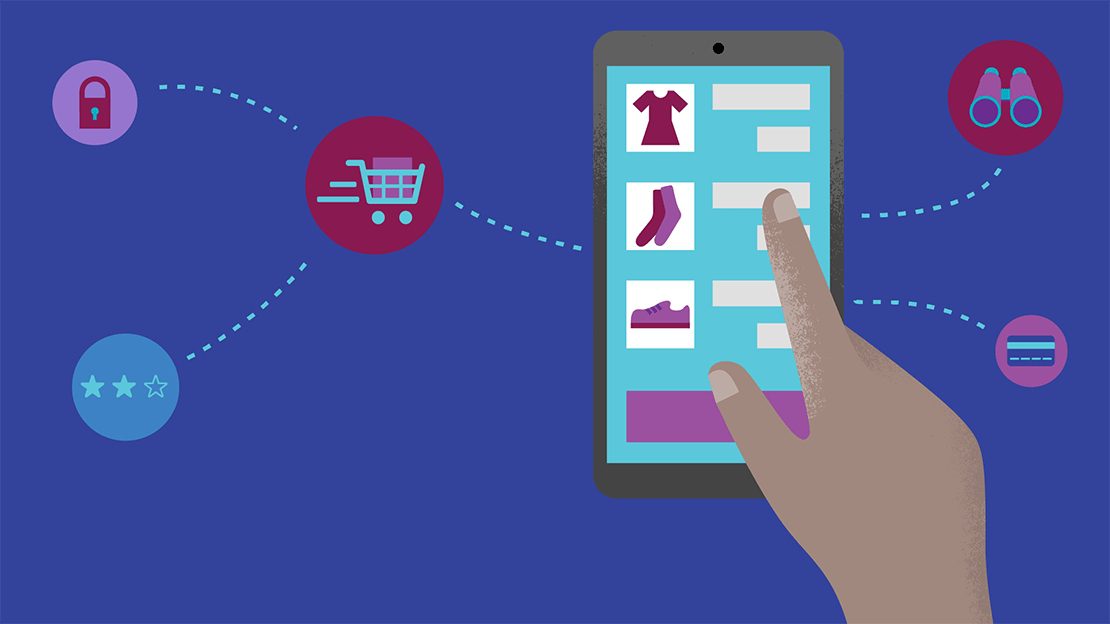
Smartphone users spend more than 7X more time in native apps than on mobile browsers, and they tend to access them 13X more often, according to a survey from App Annie. This sends a clear message to retailers — if you haven’t done so already, now is the time to optimize your mobile app.
Consumers are flocking to these apps at a rapid rate. Time spent in mobile apps has nearly doubled over the past two years, with consumers spending two hours a day in apps on average. In 2021, users are anticipated to spend more than 3 trillion hours in apps globally, doubling the approximately 1.5 trillion hours spent in 2016.
Emphasize The User Experience Above All Else
More than half (59%) of businesses say a user-friendly experience is the biggest factor in retaining mobile app users. This far exceeds any other factor, including:
-
Value-added features (35%);
-
Targeted relevant content (29%);
-
Strong customer service (20%); and
-
User community (19%).
Developers will want to balance creating the best possible in-app experience with using these other factors to cement or incrementally improve retention.
Luckily for consumers, marketers appear to be listening to their concerns. As many as 63% of respondents expect their app marketing budgets to increase, with 23% expecting them to do so by “a lot.” Retail marketers, in particular, have some of the highest expectations of any industry surveyed, with more than 70% of respondents expecting budgets to increase.
Customer Acquisition Leads Mobile Marketing Goals
When it comes to marketing goals, businesses primarily seek to acquire new users (80%). Additionally, these marketers also want to:
-
Retain or re-engage current users (61%);
-
Drive new revenue streams (60%);
-
Improve customer engagement (51%); and
-
Improve branding awareness/perception (44%).
There’s no clear leader among techniques for driving user engagement through mobile, whether they are aimed at a current or newly acquired user. Social sharing and push notifications were the most popular strategies for driving user engagement, at just under 20% of respondents each. But 20% of businesses say they don’t use the engagement strategies listed in the poll, with another 14% saying they don’t even know what their biggest user engagement drivers are.